
ShiftSleep vs Timeshifter: Shift Recovery or Travel Circadian Planning?
Timeshifter is built around jet lag, travel, and circadian plans. ShiftSleep is built around recurring night shifts, rotating rosters, fatigue, daytime sleep, and recovery between shifts.

Both products care about timing. The difference is whether the timing problem comes from travel or from shift work.
What the two products are really optimized for
The overlap is timing guidance. The split is the use case: travel disruption versus ongoing shift-work recovery.
Timeshifter focuses on jet lag and circadian travel plans
Its public positioning emphasizes personalized jet lag advice, body clock timing, and travel-oriented adjustments.
ShiftSleep focuses on recurring work rosters
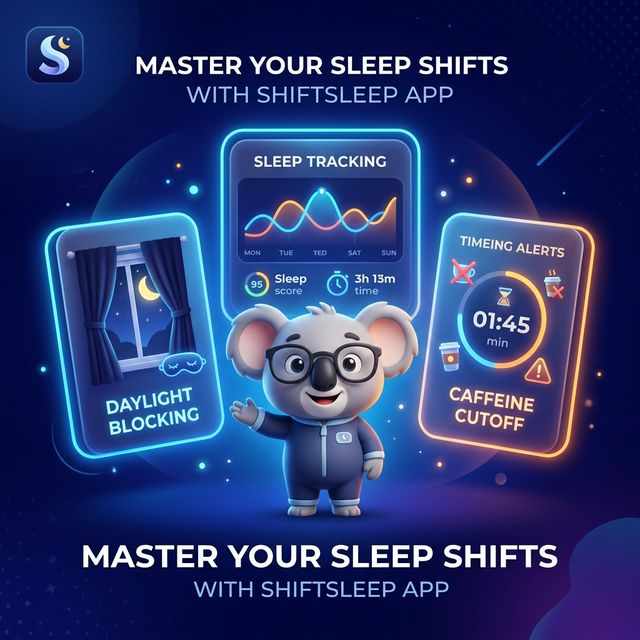
The app is built for night shifts, rotating schedules, recovery days, caffeine cutoff timing, and fatigue patterns across the week.
Choose based on whether your disruption comes from flights or from shifts
The same word “timing” leads to different tools when the underlying problem is different.
Choose ShiftSleep when the disruption is the job, not the flight
ShiftSleep fits when the timing challenge keeps coming back because the roster keeps changing.
You work nights, rotations, or long runs of shifts
Use ShiftSleep when the source of disruption is recurring work patterns rather than occasional travel.
You need caffeine timing inside a work recovery plan
The app ties caffeine cutoff to the sleep window that follows the shift.
You want fatigue and recovery feedback over time
ShiftSleep makes more sense when the pattern matters, not only one trip or transition.
You work nights, rotations, or long runs of shifts
Use ShiftSleep when the source of disruption is recurring work patterns rather than occasional travel.
You need caffeine timing inside a work recovery plan
The app ties caffeine cutoff to the sleep window that follows the shift.
You want fatigue and recovery feedback over time
ShiftSleep makes more sense when the pattern matters, not only one trip or transition.
Which timing problem are you solving?
Use the comparison table to separate travel circadian planning from shift-work recovery planning.
Decision pointCapability | Shift-work recoveryShiftSleepBuilt around work rosters and recovery | Travel circadian plansTimeshifterBuilt around jet lag and body clock timing |
|---|---|---|
Recurring night and rotating shiftsOngoing work schedule changes | Core workflow | Not the main use case |
Bedtime, wake time, and caffeine around a rosterTiming tied to scheduled work | Core workflow | Travel-focused timing |
Fatigue and recovery patterns across the weekSee how the roster is wearing on you | Built in | Not the main use case |
Daytime sleep after a night shiftRecovering when you need to sleep against daylight | Built in | Not the main use case |
Jet lag and pre-travel adjustment plansTravel-specific circadian planning | Not the main use case | Core workflow |
Questions about choosing between ShiftSleep and Timeshifter
Positioning differences explained without overstating the overlap.
Is Timeshifter only for travelers?
Its public positioning is clearly centered on jet lag, travel, and circadian adjustment plans.
Can timing advice help both travel and shift work?
Yes, but the surrounding workflow is different. ShiftSleep is built around recurring work schedules and recovery between shifts.
Which app is better for night-shift recovery?
ShiftSleep is the clearer fit when the problem is sleep after work rather than after a flight.
Does ShiftSleep claim to replace medical sleep care?
No. ShiftSleep offers planning and recovery guidance, not diagnosis or treatment.
Use a timing app built for the schedule you actually live
Download ShiftSleep if your main challenge is recurring shift-work recovery rather than jet lag planning.